Table Of Content
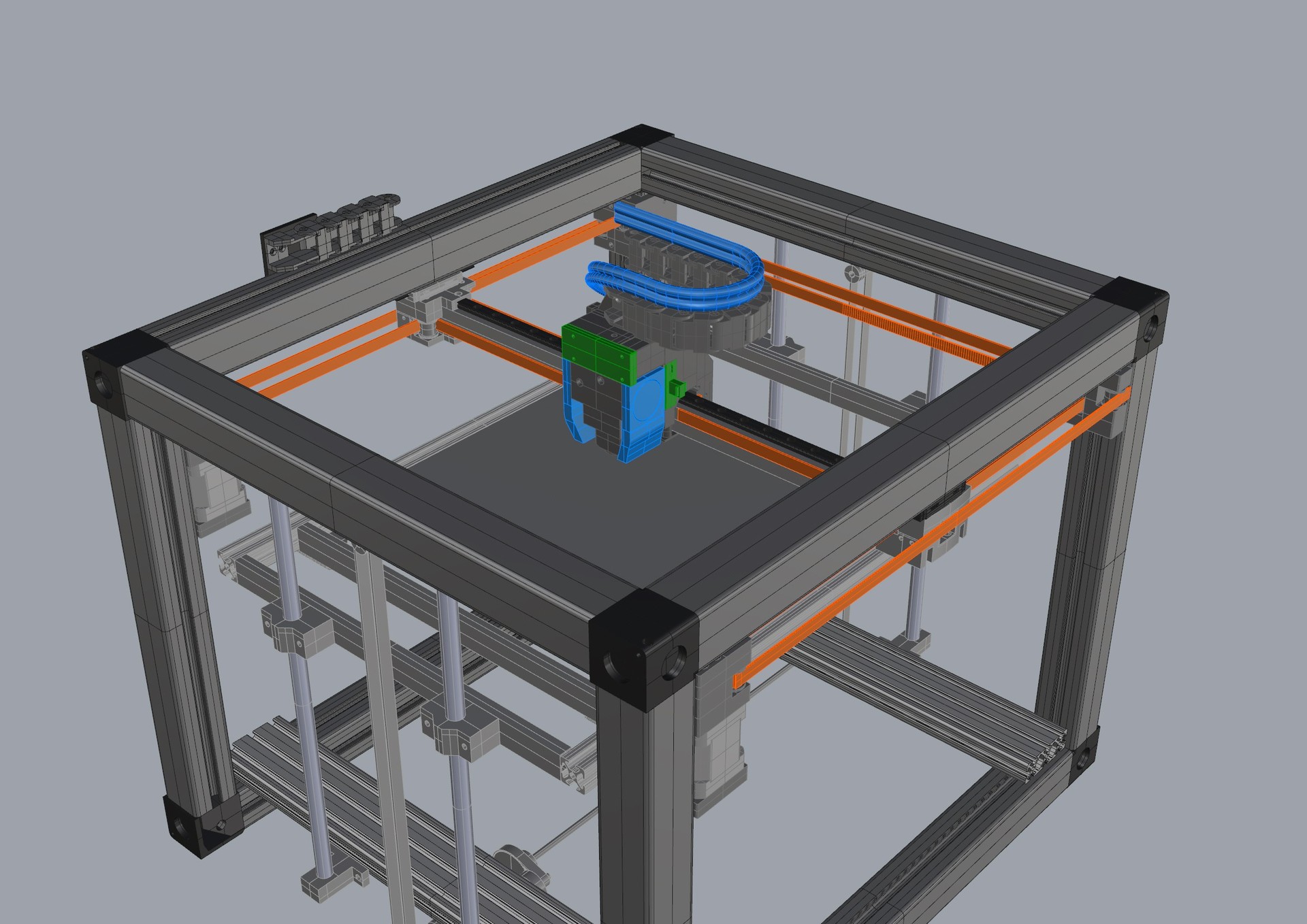
And the simulation feature enables users to test their project’s design for performance and functionality before implementing and starting the development phase. Autodesk Fusion 360 is probably the most powerful 3D Printing software out in the market today, and it is preferred by engineers, designers, and architects globally. These packages look at things such as surface finish quality and toolpath optimization in order to give you better results when you print out another set of parts with your 3D printer. It also offers a range of advanced settings such as material settings and print resolution control. MeshMixer also allows for multiple print settings such as size, resolution, thickness, and more to be modified easily with the built-in editor. Maya also includes helpful features such as motion capture tracking, which can be used to animate objects or characters within the print.
– 3DPrinterOS — great 3D printer software for schools and large businesses
Selecting the product purely because of its features and functionality is not recommended here. Instead, go for software that best fits your requirements, whether they’re heavy or light. Now you have all the tools in our grasp that you need to design and develop your 3D model. Additionally, it has a smooth learning curve with beginner-friendly visualization techniques. This software can be purchased at economical rates and is entirely devoid of extra maintenance charges.
SolidWorks [Design]
The lack of vibrations will also improve print quality on slight overhangs. Gives the user control over where to place the seam - hide it in convex corners or in easy to remove locations such as concave corners. The print time location has moved from the bottom-right corner of the 3D viewer to the left of the Print over Network/Save to File button. For most basic filaments, FFF printing does not need support when bridging materials within a 10 mm gap. Overhangs below 45 degrees must be supported from below with support material. The Rhino SubD tools provide total value for the money with the unique algorithm of QuadraMesh in action.
– Blender — most advanced 3D printer modeling software (and it’s free!)
Prints can be started, paused, and stopped remotely, and plugins are available to track print statistics and send push notifications on job progress. This is a natural trade-off between capabilities and user friendly many designers have to make when creating a detailed software. While it is not the most accurate software at capturing user intent, it is one of the best on the market. We design our software so anyone can use it – both experienced or rookie 3D printer users. You can also slice STL files for printing, but to just call OctoPrint a 3D slicer is underselling it.
This process makes it possible to quickly prototype ideas or even produce final products without the need for additional production steps like casting or milling. Its simulation, testing, and analysis tools make it an obvious choice if this is an important part of your 3D project. In addition to its basic modeling capabilities, MeshLab also provides a range of plugins for improved functionality. Additionally, AutoDesk Maya is best suited for those interested in animation because they have additional features (like realistic effects from explosions to cloth simulation). Blender is also a good choice for beginners because they have extensive tutorials for how to use the program on their website. However, we recommend checking the respective feature list of the program you have your eye on to double-check this is indeed the case before committing to a purchase.
Also, consider checking whether a solution is compatible with your operating system. Finally, look at the project requirements to select the best 3D printing solution suitable for you. There are free 3D printing tools that are ideal for creators designing on a budget. And while this used to feel like a concept for the future, it’s possible now with 3D printing software. These tools translate the idea of an object into data that a 3D printer interprets to create a real-life object. Meshmixer is an Autodesk program designed to work with dynamic high-resolution 3D meshes.
How Does 3D Printing Software Work?

Whether you are just starting out with CAD design, or are an experienced designer looking to take things to the next level, you'll find something to suit your needs on this page. The printer can then print a physical, real-world replica of the CAD software-created digital model. Developer AutoDesk also provides an extensive library of tutorials, learning resources, and projects to help you make that first step to creating a CAD design for 3D printing. Here, the idea is to simplify and process the often very complex polygonal models made with Blender to achieve better 3D printer results. Though not innately geared towards 3D printing, the relatively new 3D Print Toolbox and Mesh Analysis features take strides to make Blender a far more 3D printing-friendly program.
Though made by Ultimaker, Cura is compatible with almost any 3D printer you can ever think of, with custom pre-sets for hundreds of the most commonly used printers. Advanced users can tweak their settings according to their needs such as for supports and infills, whereas beginners can use the 3D printing software’s recommended settings for quick and easy printing. The free package includes access to Vectary Studio to create and design models, as well as the ability to export your creations in OBJ or STL file formats, though for other formats you’ll need to upgrade.
Love Cura?You'll love our award-winning 3D printers. Optimized for the perfect print.
Should You Use SOLIDWORKS For 3D Printing? - 3Dnatives
Should You Use SOLIDWORKS For 3D Printing?.
Posted: Thu, 11 Apr 2024 07:00:00 GMT [source]
It uses a part profile from drawings made in a standard sketching software and use the SXF file to do this. With its stronger focus on programming, OpenSCAD may appeal to some while alienating others. It’s not the best for professional purposes, but it’s a great training tool.
You may want to consider features such as support for slicing, a modeling environment, or surface optimization tools. These can then be imported into a slicer to prepare the model for 3D printing and create a G-code file with all the instructions the printer needs to complete the print. Elsewhere, it also offers mechanical design and analysis tools, useful if you’re printing functional or mechanical 3D parts. SolveSpace exports to all the most common formats, including STL, but also directly to G-code.
The software has an easy learning curve and there are advanced features available for professionals at an extra cost. It is especially good for designing interior and exterior architectural projects but also has tools for a diverse range of other purposes. Once designed, you can easily export your models as STL files for 3D printing, and view them in any previewer, as well as posting them to Facebook using their 3D viewing features. Perhaps after ascending TinkerCAD’s shallow learning curve you’ll want something more advanced, but as a tool to learn a 3D printing software modeling tool, TInkerCAD is a fantastic introduction.
Though it looks fairly basic due to how easy it is to use, TinkerCAD has proved time and time again that it is up with the best free 3D modeling software out there for creating 3D models. There are now hundreds of different free 3D modeling software tools for users looking to create their own 3D models – so it can be tricky to know where to start. This software offers a powerful yet flexible toolset that allows you to create stunning characters, interiors, objects, and whole worlds. For example, one of the software’s most impressive modeling tools is its advanced spline workflows, which allow you to create and animate geometry in various intuitive ways. There are also retopologize features that generate clean topology to reconstruct surface topology into evenly distributed quads while preserving the original mesh shapes.
FreeCAD is a free 3D modeling software with some real skin in the game, having been initially released back in 2002, and despite still being in beta stage development has progressed significantly. It’s designed to make creating 3D versions of real-life objects as effective and simple as possible. 3D software modeling tools range from being easy to use by even the newest of beginners to pro-level software that can take years to learn – so it’s important to pick one that matches your skill level. Aside from its fantastic usability, SketchUp has some great features that make it a popular 3D modeling software.
It doesn’t include all the features, but there’s everything there for those using it to create 3D models for printing. Developed by Autodesk, Fusion360 is a complete CAD environment that’s stacked to the rafters with professional-grade features. You can employ virtually every modeling technique under the sun (parametric, mesh, freeform, etc) to prototype, design, and iterate for virtually any 3D printing application.
The upside of this is that none of the tools are blocked behind a pay wall, so you can tweak your models to your heart’s desire. With a library of literally millions of files, users can find shapes that suit them best and manipulate them as they wish. It also has a direct integration with 3rd party printing services, allowing you to print and have your print at your door-step at the press of a button. Even though it can be a bit too simple to the point of limitation, it serves as a great way to learn about 3D modeling. Years ago, we had to spend lots of money and time to acquire and learn modeling software.
TinkerCAD also has a gallery full of designs created by the community that you can use to satisfy curiosity or inspiration. Because it is web-based (rather than downloadable software), you can access your work anywhere – making it an ideal choice for frequent travelers or those who often switch between different computers or devices. AutoDesk AutoCAD also includes support for multi-layered surfaces, making it possible to create complex structures quickly and easily. The software is also compatible with a range of CAD formats, which gives you the ability to quickly import models and print them directly from the software. While most of our free CAD software recommendations are free, many feature free trials rather than unlimited access to the program. Prices vary drastically from software to software, so be sure to select one that’s within your budget.


No comments:
Post a Comment